STAY HYDRATED THIS RAMADAN
with our scientifically balanced electrolytes FOR FASTING DAYS
Fasting can lead to dehydration and electrolyte loss, causing fatigue and headaches.
O.R.S Hydration Tablets:
☑️ Restore electrolytes (sodium, potassium, magnesium) lost during fasting hours
☑️ Prevent de-hydration with rapid absorption formula
☑️ Halal Friendly: dissolve in water at Suhoor or Iftar
Why O.R.S?
-
-
EASY ON THE
STOMACH -
HALAL
FRIENDLY -
GREAT TASTING NATURAL FLAVOURS
-
Ramadan Hydration Value Pack (£0.29 per tablet)
Fasting from dawn to dusk challenges your body’s hydration and electrolyte balance, leading to fatigue, headaches, and low energy. O.R.S. Hydration—created by pharmacists since 2012—delivers scientifically balanced electrolytes (sodium, potassium, magnesium) for rapid absorption, hydrating you 3x faster than water alone.
88 x Halal friendly electrolyte tablets

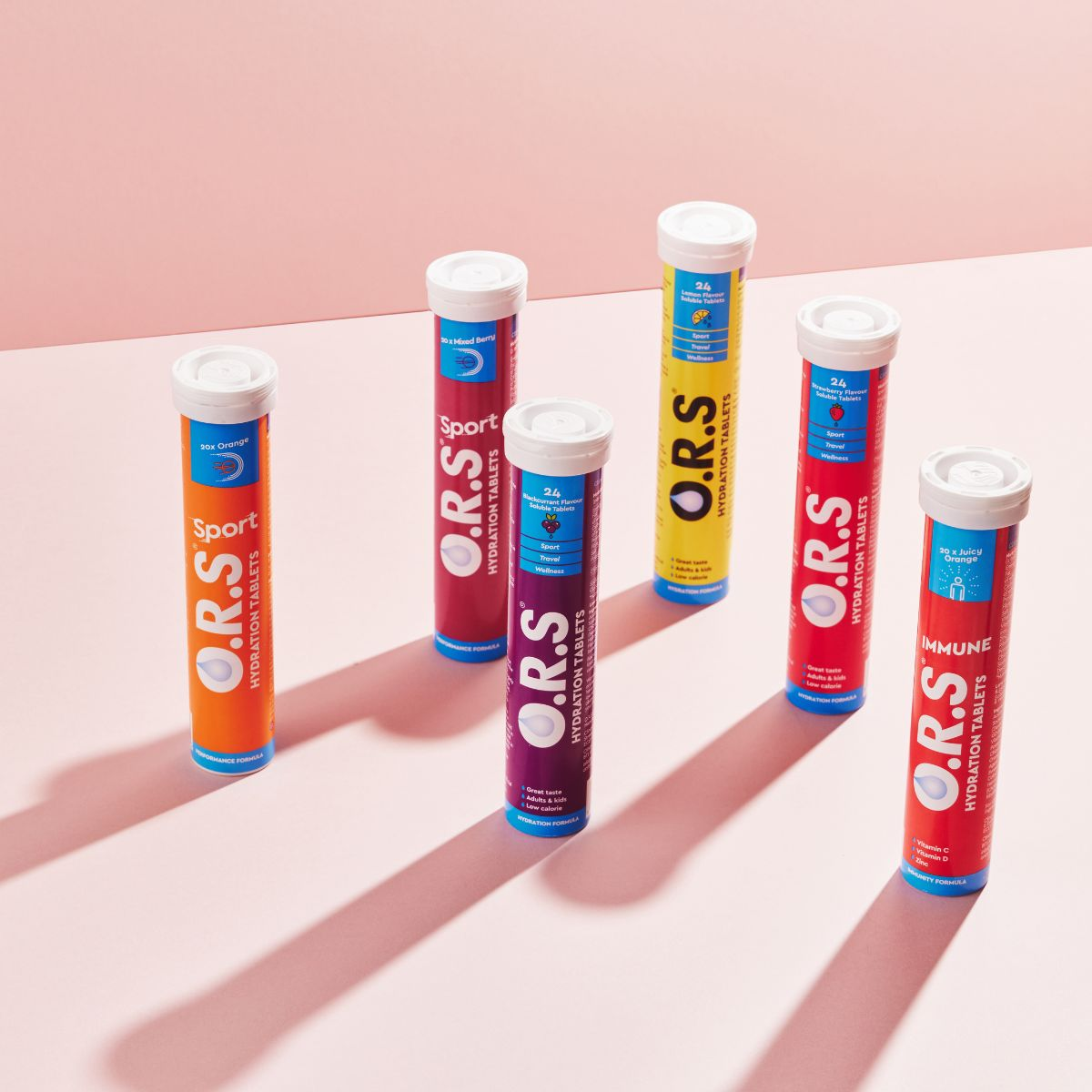
4 x delicious juicy flavours
Exclusive savings + FREE gift

Top hydration tips for Ramadan by pharmacists
-
Tips For Staying Hydrated During Ramadan Fasting Month
The fasting during Ramadan month when no fluids or food are taken from dawn to dusk can present challenges in staying adequately hydrated. Here are some tips.
Tips For Staying Hydrated During Ramadan Fasting Month
The fasting during Ramadan month when no fluids or food are taken from dawn to dusk can present challenges in staying adequately hydrated. Here are some tips.
-
Top Pharmacist Hydration & Nutrition Tips For Ramadan
Fasting can lead to dehydration and electrolyte loss, causing fatigue or headaches. We asked pharmacist to share their tips on smart ramadan hydration.
Top Pharmacist Hydration & Nutrition Tips For Ramadan
Fasting can lead to dehydration and electrolyte loss, causing fatigue or headaches. We asked pharmacist to share their tips on smart ramadan hydration.
-
The Essential Guide to Staying Well Hydrated During Fasting
People observing fasting need to pay careful attention to their hydration levels, because it is likely that they are losing more fluids than they are taking in.
The Essential Guide to Staying Well Hydrated During Fasting
People observing fasting need to pay careful attention to their hydration levels, because it is likely that they are losing more fluids than they are taking in.
Frequently Asked Questions
How fasting affects hydration?
Observers of Ramandan need to take extra care to maintain hydration and electrolyte levels during fasting. It’s a time when even healthy people may lose weight, feel less energetic than usual, and be prone to digestive issues such as constipation and bloating. Over time, chronic dehydration can lead to dry skin, brain fog, stiffness of the joints, and fainting or fits.
Many people don’t realise that abstaining from food, rather than just water and other drinks, makes them prone to dehydration. On average, we get about 20% of the body’s water needs through digesting the food we consume throughout the day, so this deficiency needs to be addressed to avoid unwanted side effects and even serious health complications.
Anyone observing a fasting period, whether for religious reasons or as part of a diet regimen, needs to pay careful attention to their hydration levels, because it is likely that they are losing more fluids than they are taking in. This is particularly the case for strict observers of Ramadan who abstain from drinking as well as food from dawn until dusk.
Dehydration not only makes us feel thirsty and lightheaded with an unpleasantly dry mouth, but it can also have more serious consequences. This is because we are not only depleted of water, but also of essential minerals known as electrolytes that are contained in bodily fluids.
These minerals, such as sodium, chloride, calcium, potassium and magnesium help the body to regulate fluid levels, and they cannot be quickly replaced once the balance is upset. This is because even if you drink a lot of water, your body’s cells will be less efficient at absorbing it.
Electrolytes serve other important functions in keeping the liver, heart, and muscles functioning properly. Symptoms of a possible electrolyte imbalance include mental fogginess or confusion, muscle cramps or weakness, numbness or tingling, slow or arrhythmic heartbeat, low blood pressure, vomiting or feeling sick, and tiredness and fatigue.
Dehydration over a longer period of time can cause toxins to build up in the body, which can lead to digestive problems, unhealthy looking skin, dry eyes, and stiff joints. If it is very severe, it may even cause fainting, seizures, brain damage or death.
What makes O.R.S different?
O.R.S Hydration Tablets are the only NHS-prescribed electrolyte tablets following WHO (World Health Organisation) hydration guidelines.
Expertly formulated by pharmacists to deliver a great-tasting, effective hydration solution.
Designed to tackle the universal challenge of balancing optimal hydration with refreshing flavour, these tablets offer a delicious science-backed answer trusted by healthcare professionals.
TRUSTED BY PROFESSIONALS
Clinically proven formula recommended by the UK Department of Health as a Dioralyte alternative.
SCIENCE FIRST
Precision-balanced electrolytes with no artificial additives, vegan, and gluten-free.
GREAT TASTE
Choose among our natural delicious flavours.
🍓🫐🍋🍊
GLOBAL IMPACT
Trusted worldwide since 2012 by families, athletes, and NHS healthcare providers.
Taking O.R.S during Ramadan
You should use O.R.S Hydration Tablets during the hours when eating and drinking is allowed - after the sunset, and before the sunrise. Take O.R.S electrolyte solution:
- During Suhoor: together with your pre-dawn meal. The time for Suhoor ends at dawn, just before the Fajr prayer.
- During Iftar: together with your meal after the sunset
- Between Iftar and Suhoor: hydrate smart - dissolve O.R.S tablet(s) in plain water and sip during the time when eating/drinking is allowed. Avoid fizzy and sugary drinks.
It’s advisable to hydrate in smaller amounts for the first two hours before and after the fasting period, rather than drink a large volume of water in one go. This is because the body can’t process a sudden influx of fluid as well, and most of it will pass straight through.
Our pharmacist-formulated electrolyte tablets support and overall health, recovery and sports performance, keeping you energised and hydrated no matter the occasion.
Product & Formula
How long does prepared O.R.S last?Room temperature: consume within 8 hours. Refrigerated: up to 24 hours. |
How should I store O.R.S tablets?Store unopened tubes in a cool, dry place away from moisture or direct sunlight. |
Are O.R.S tablets safe during pregnancy or breastfeeding?Our low-sugar, pharmacist-formulated tablets are generally safe when used as directed. However, always consult your GP if pregnant, breastfeeding, or managing conditions like high blood pressure. |
How do O.R.S Hydration Tablets work?O.R.S Hydration Tablets use electrolyte-driven osmosis to help your body absorb water faster and more effectively than plain water. |
What happens if I’m low on electrolytes?Symptoms include fatigue, headaches, muscle cramps, and brain fog. |
Can diabetics use O.R.S Hydration Tablets?This product contains a small functional dose of glucose, essential to enhance electrolyte absorption and hydrate you faster. Diabetics with good sugar control should consider this in their daily calorific intake. If in doubt, always consult your healthcare provider before use. O.R.S ORIGINAL 💧 1.6g glucose per tablet.O.R.S SPORT 🏃 1.1g glucose per tablet. |
Are O.R.S tablets allergen-free?Yes! Our tablets are vegan, gluten-free, nut-free, soy-free, and free from artificial preservatives, flavours, or colourings. Certified halal, kosher, and vegetarian-friendly. |
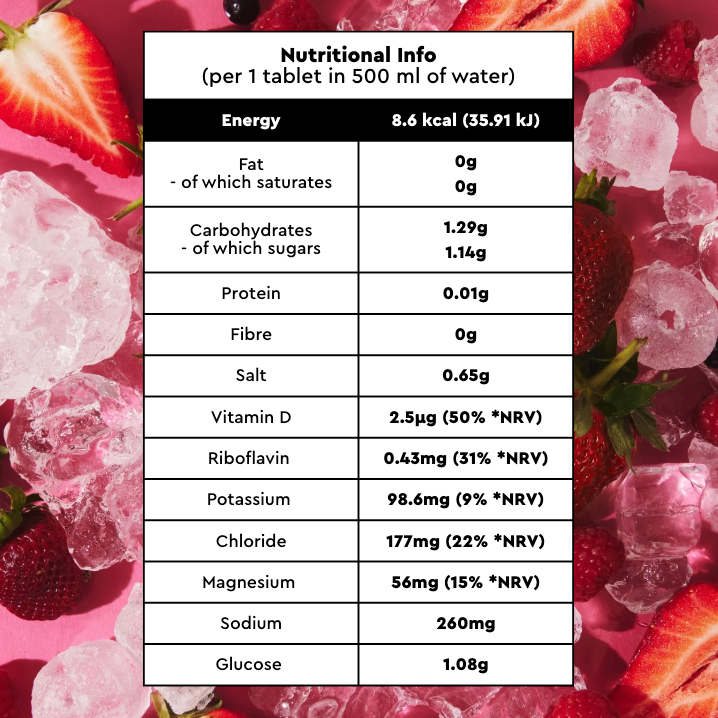
What electrolytes are in O.R.S?SODIUM Restores sweat loss, balances fluids.POTASSIUM Reduces cramps, supports muscles.CHLORIDE Aids digestion + muscle function.In addition to electrolytes, we have added a small functional amount of glucose to enhance electrolyte absorption (hydrate you faster). |
Do electrolytes hydrate faster than water?Absolutely. Electrolytes help your body retain 50% more fluid than water alone. |
Who can use O.R.S Hydration?
Our hydration tablets are family-safe (ages 3+) and designed for every need.
O.R.S ORIGINAL 🥵
Daily electrolyte hydration support tablets for all adults and children (3+ years) that are dehydrated or simply want to hydrate more effectively.
O.R.S Original Hydration tablets may be given to children under 3, provided it is under the guidance / supervision / recommendation of a healthcare professional such as a nurse, pharmacist or doctor.
O.R.S SPORT 🏃
Advanced electrolyte formula with magnesium + vitamin D for all athletes, sports enthusiasts, and those who enjoy long sweaty exercises and intense training. Suitable for adults and children (12+ years).
O.R.S IMMUNE 🌞
Combines essential electrolytes with vitamin C & D, iron and zinc for daily immune + hydration support. Suitable for adults and children (12+ years).
O.R.S KIDS 🍓
Paediatrician-recommended, gluten-free hydration in child-friendly strawberry flavour.
Can be used by kids and adults of all ages, however for children under 3 years of age, the dosage should be 10ml per kg of bodyweight and given in small sips. We recommend using ORS under the recommendation of a doctor or pharmacist for children under 3.
Information for children aged 3-6
Dissolve 2 tablets (O.R.S Original or O.R.S Kids) in 200ml of water and drink 10ml of dissolved solution per kg of body weight in small sips.
For use under 3 we would recommend using this same dosage regimen under the guidance and/or supervision of a healthcare professional such as a nurse, pharmacist or doctor.
What our customers say
-
Over the last few years, l've really struggled with concentration at work during Ramadan. Although I drink plenty of water, l've always felt dehydrated from the moment I wake up. However, since I started taking O.R.S Hydration tablets, l've noticed a huge difference. Don't get me wrong- I'm still thirsty by the end of the day, but I find it much easier to concentrate at work, and I feel less fatigued overall.
Umar-Khayam Hameed
Founder, AIS Athletics UAE -
Hydration has always been a key aspect of my health and fitness. During Ramadan, it's always difficult to maintain my regular routine because I'm resting as much as possible and training less frequently. However, what I found with O.R.S Hydration was an increased energy level. I don't know it it's because I can control how many tablets I add to a glass of water or because they actually taste really good - but whatever it is, it works!
Mehdi Takordmiovi
Arabic Champion 2019
Power your Ramadan with O.R.S Electrolytes
-
Ramadan Hydration Value Pack
Vendor:SAVE 25% + FREE GIFT4.4 / 5.0
(1263) 1263 total reviews
Regular price £25.00Regular price£39.95Sale price £25.00SALE -
SALEFounder’s Favourites
Vendor:SAVE 20% + FREE GIFT4.6 / 5.0
(113) 113 total reviews
Regular price £28.00Regular price£34.96Sale price £28.00SALE -
Blackcurrant Electrolyte Tablets
Vendor:EVERYDAY HYDRATION4.4 / 5.0
(1263) 1263 total reviews
Regular price From £7.99Regular priceSale price From £7.99 -
Lemon Electrolyte Tablets
Vendor:EVERYDAY HYDRATION4.4 / 5.0
(1263) 1263 total reviews
Regular price From £7.99Regular priceSale price From £7.99
More on Ramadan Hydration
Suhoor foods for energy
Clinical guidance from the British Islamic Medical Association (BIMA)
consistently emphasises that Suhoor should support hydration as much as it
does energy. Complex carbohydrates help stabilise blood glucose, while
protein and healthy fats slow digestion and reduce rapid energy dips. Starting
the fast even mildly dehydrated increases fatigue later in the day. Including
adequate fluids and, where appropriate, an oral rehydration solution such as
O.R.S Hydration Tablets at Suhoor may support more effective fluid
absorption than water alone, particularly for those prone to headaches or
light-headedness.
Healthier Iftar choices
BIMA Ramadan guidance encourages breaking the fast gently. Meals high in
salt, sugar, or deep-fried foods can worsen bloating, reflux, and thirst. Pairing
traditional foods with vegetables, lean protein, and gradual fluid intake
supports digestion. In people who break the fast, feeling dehydrated, slow
rehydration, sometimes with electrolyte solutions, may help restore fluid
balance more comfortably.
Better digestion at Iftar
It takes the brain around 20 minutes to register satiety, physiologically. BIMA
resources recommend breaking the fast lightly, pausing, then continuing with
a well-balanced meal. Slow eating and spacing fluids improve digestion and
reduce bloating. Large volumes of water taken quickly can delay gastric
emptying and worsen discomfort; hence, it is important to replenish lost water
and electrolytes with hydration tablets like O.R.S.
Hydration between fasts
Hydration is a central theme in BIMA’s Ramadan health advice. Drinking excessive water in a short period can lead to bloating and an electrolyte imbalance. Spacing fluids across the evening and pre-dawn hours is more effective. For individuals who sweat heavily, exercise at night, or experience recurrent headaches, oral rehydration solutions can help replace electrolytes lost during fasting and support overnight hydration.
Fasting and exercise
Guidance supports light activity during fasting hours and more structured
exercise after Iftar. Rehydration after exercise is key to preventing dehydration
and heatstroke. Fluids that replace both water and electrolytes may support
muscle recovery, energy levels, and overall well-being during Ramadan, when
intake windows are limited.
Preventing ramadan headaches
Ramadan headaches” are commonly linked to dehydration, caffeine
withdrawal, and unstable blood glucose. The advice focuses on gradual
caffeine reduction before Ramadan to avoid withdrawal effects, balanced
meals, and consistent hydration overnight. In some people, particularly those
who struggle to drink enough fluids, electrolyte solutions may help reduce
headache frequency by improving hydration status, especially when fasts are
long and the time between fasts is short.
Fasting and screen time
BIMA wellbeing resources note that reduced screen use, especially late at
night, supports better sleep during Ramadan. Improved sleep helps regulate
stress hormones, appetite, and hydration signals. Poor sleep is associated with
increased fatigue and perceived thirst during fasting hours. Healthwords has a
fantastic article on sleep tips (https://www.healthwords.ai/explore/article/nutrition-and-wellness/sleep/sleep-how-to-do-it-well)
Productivity while fasting
Reduced concentration during fasting often reflects mild dehydration,
disrupted sleep, and energy conservation. Practical strategies supported by
Ramadan health guidance include scheduling demanding tasks earlier,
allowing short rest periods, and maintaining steady hydration between
Maghrib and Fajr. Even modest improvements in fluid balance can improve
cognitive performance.
Fasting and medication safety
All guidance stresses that people with long-term conditions, pregnant
individuals, and older adults should seek medical advice before fasting.
Hydration needs vary, particularly in kidney, heart, or metabolic conditions.
The use of electrolyte solutions should always be discussed with a healthcare
professional to ensure suitability and safety. BIMA provides guidance on
chronic disease management during Ramadan, including advice for people
with diabetes and other conditions. They emphasise pre-Ramadan
consultation with healthcare providers to create safe, individual plans,
including medication adjustments where needed. This ensures that people
with chronic conditions and older adults can make informed decisions about
fasting and work with clinicians to adjust medicines appropriately.