
Post-Workout Rehydration: Why Water Isn't Replacing What You Sweat
Share
Picture the scene. You’ve finished your workout, warmed down and towelled off. You’ve done everything you think you’re supposed to do post-workout, including ‘rehydrating’ with an entire bottle of plain water. Except, as time goes on, you don’t feel rehydrated. And an hour later, your head starts to feel foggy, your legs feel heavy, and there’s a muscle in your calf that won’t stop twitching.
What’s happened?
The simple answer is that it’s not just water that leaves your body when you sweat; you also lose electrolytes. And when you try to address the loss of both water and electrolytes with just water, you're only replacing part of what you've lost. For people interested in more complete rehydration and recovery, understanding what’s lost in sweat, what it does, and how to replace it will change the way you hydrate.
Why Is Sweat Salty? What You Lose When You Sweat
Sweat is mostly (but not all) water. The part that’s not is where rehydration problems arise.
Dissolved in sweat are electrolytes, including sodium, chloride, potassium and magnesium. Sodium is by far the electrolyte we lose most of in sweat, though the exact balance of loss varies from person to person, depending on factors like genetics and fitness levels. During exercise, the sweat and electrolyte loss are also heavily influenced by the length and intensity of your workout, as well as environmental factors, e.g. heat.
Sodium
Sodium contributes to normal fluid balance and is an important electrolyte lost in sweat.
Potassium
Potassium contributes to normal muscle function and normal nervous system function.
Chloride
Chloride is an important electrolyte involved in normal fluid balance and acid-base balance.
Magnesium
Magnesium contributes to normal muscle function.
How Does Exercise Intensity Affect Electrolyte Imbalance?
The harder you train, the more you sweat. The more you sweat, the more water and electrolytes you lose. But it’s not a flat curve. As exercise intensity increases, the concentration of sodium in each litre of sweat rises, too. In one study, total sodium and chloride losses increased by roughly 150% between low and moderate exercise intensities.
In practical terms, two hours of gentle exercise may cause someone to lose just under a gram of sodium. However, under moderate-to-high-intensity exercise, that figure can double. That means pushing harder in the gym doesn’t just mean sweating more; it means every drop of sweat carries away more electrolytes like sodium.
Does Water Have Electrolytes? What Happens If You Just Drink Water
Water can replace the water you sweat away, but it won’t replace the electrolytes, and in some cases, it can dilute what’s left. Sodium is the main electrolyte affected by this, because it’s what keeps the balance of fluid inside and outside your cells in check. Drink a lot of water without replacing lost sodium, and your fluid balance gets diluted. In more serious, prolonged cases, this can develop into hyponatremia, a state of too much water and not enough sodium.
To be clear, this isn’t a risk from a 30-minute gym session. It’s specifically associated with prolonged or endurance exercise, where an athlete might sweat a lot, and then take on large volumes of water without replenishing sodium. Take the Boston Marathon: a study of runners in this race found that 13% crossed the finish line with some degree of hyponatremia, the most common cause being excessive fluid intake.
Other studies comparing water with sodium solutions have found plain water to be less effective at restoring fluid balance after exercise. That’s because plain water doesn’t contain electrolytes.
What Do Sports Electrolytes Do for Athletes?
Electrolytes support the basic signalling systems your muscles and nervous system rely on during exercise. Electrolyte imbalance often presents as muscle cramps, fatigue, and slower recovery.
|
Electrolyte |
Supports |
Signs you might be low |
|
Sodium |
Fluid balance and nerve signalling |
Fatigue, headaches and cramping |
|
Chloride |
Fluid balance and acid-base balance |
Fatigue, headaches and cramping |
|
Potassium |
Muscle and normal nerve function |
Weakness, fatigue and cramping |
|
Magnesium |
Muscle function and a reduction of tiredness and fatigue |
Spasms, fatigue and cramping |
If you’re noticing these symptoms after training, it’s worth reviewing your rehydration process. You may not be replenishing electrolytes quickly enough. Also, small, consistent losses add up over a training week, and by the time symptoms are noticeable, you're often already playing catch-up.
How O.R.S Sport Can Help
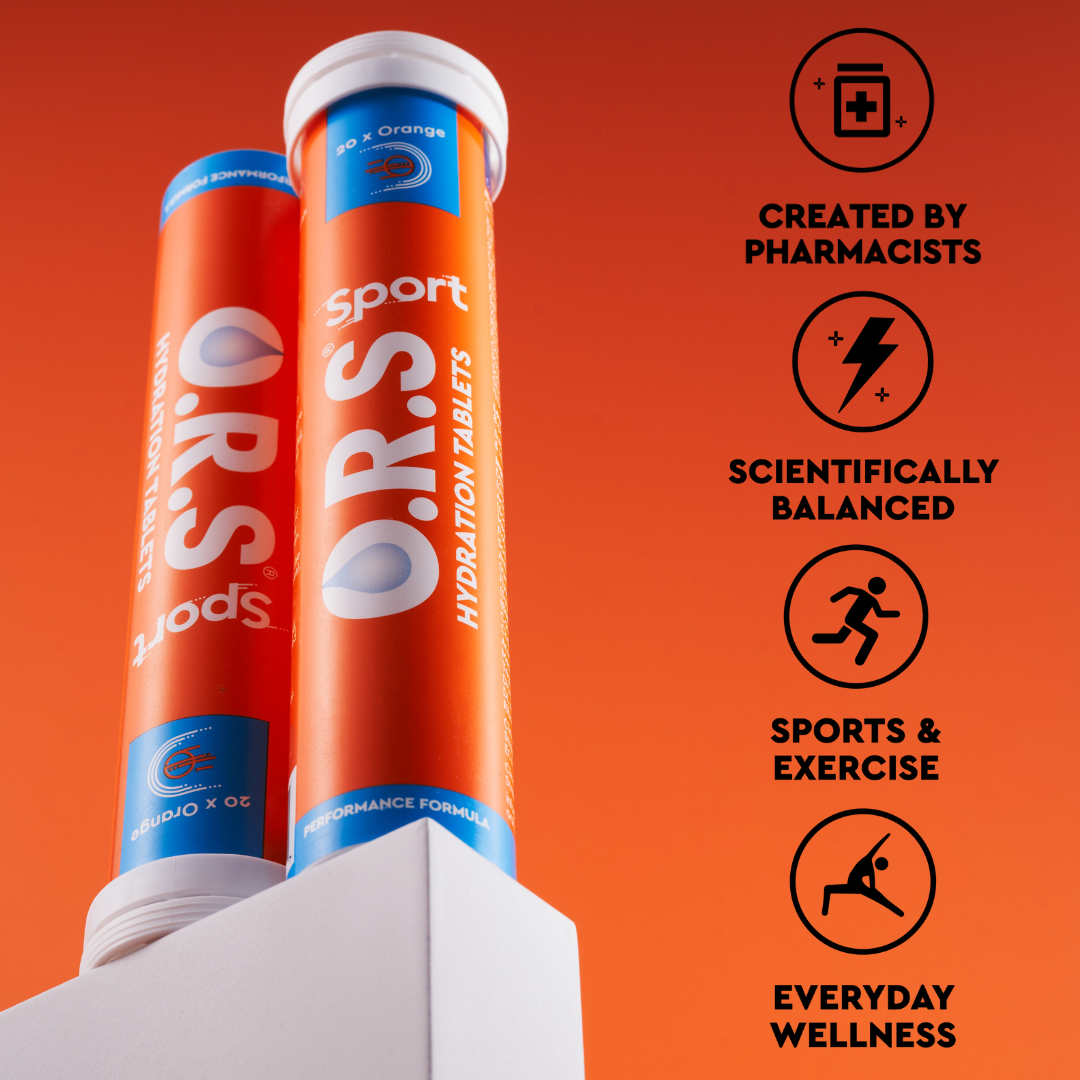
Training hard means losing water and electrolytes. Drinking water only replaces one of those things. Pharmacists have expertly formulated O.R.S Sport to replenish what you lose in long, sweaty workouts.
What’s in our sport tablets?
(per 1 tablet in 500ml of water)
Potassium 98.6mg: Potassium contributes to normal muscle function and normal nervous system function.
Magnesium 56mg: Magnesium contributes to normal energy-yielding metabolism and normal muscle function.
Sodium 260mg: Sodium helps maintain normal fluid balance and is an important electrolyte lost in sweat.
Chloride 177mg: Chloride is an important electrolyte involved in normal fluid balance.
Glucose 1.08g: Our tablets contain a small functional dose of glucose, which helps enhance electrolyte absorption to hydrate you faster.
Vitamin D 2.5µg: Vitamin D contributes to the maintenance of normal muscle function.
How to take O.R.S Sport
Dissolve ONE tablet in 500ml of water to prepare the electrolyte solution.
Adults
The recommended adult dose is 500ml when required. No more than two doses a day.
Kids (12+ Years)
The recommended adult dose is 500ml when required. No more than two doses a day.
Our scientifically balanced electrolyte mix is formulated to support physical activity and recovery. Fast-acting hydration with magnesium to reduce tiredness and fatigue, and vitamin D to support normal muscle function. Try it for yourself and see how it helps your workouts.
FAQs
What are the first signs of electrolyte imbalance?
Common signs of electrolyte imbalance include fatigue, headaches, muscle cramping and a general feeling of heaviness. These can build up gradually and even show up after training. If you feel these regularly, it might be worth looking at how you hydrate, not just how much water you drink.
Do I need electrolytes after a short, easy workout?
Not always. For shorter workouts, with less sweat and electrolyte loss, water is usually enough to stay hydrated. Electrolyte loss increases with intensity, duration and heat.
What’s the difference between O.R.S Sport and regular sports drinks?
O.R.S Sport is pharmacist-formulated with a precise WHO-recommended blend of electrolytes. O.R.S Sport also contains only a functional dose of glucose to support electrolyte absorption and faster rehydration, so it has much less sugar than some sports drinks.
When should I take O.R.S Sport – before, during or after a workout?
Whenever you need it. You can take it before a workout to prepare, during a session to replace electrolyte losses, or after to support recovery. Just dissolve one tablet per 500ml of water as needed.
Can I take O.R.S Sport every day?
Yes, O.R.S Sport can be used daily, up to two doses.